THE QUESTION EVERY PARENT ASKS
Why Athletots? Here is the honest answer.
Fair question. You have read enough school websites to spot a feeling being sold as a fact. So here is the plain version — what Pioneers and Striders actually do differently,
and why the 1:8 ratio is a real structural promise. Compare it yourself.
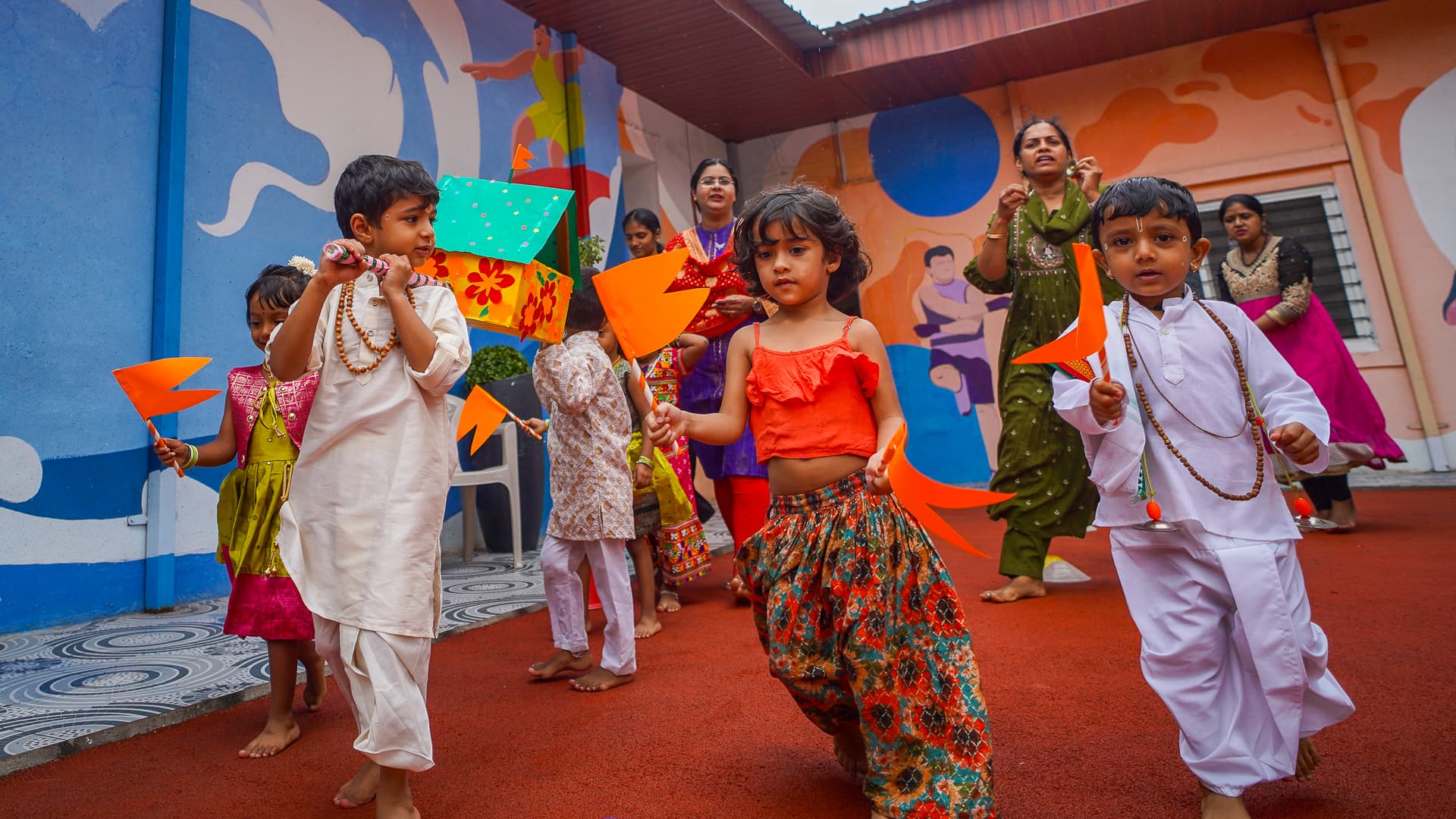
WHAT ACTUALLY MAKES US DIFFERENT
Four structural differences,
built into how we run.
SIDE BY SIDE
What a conventional school does.
What Athletots does instead.
Here's our own approach, laid out specifically rather than in vague generalities.
Conventional School Model
- Sit still first. Move later, if there is time.
- Sport is treated as a break from the real lesson.
- Bigger batches, and it is hard to know who is really watching your child.
- Children compared and ranked against each other.
- The school and the sports class are two separate things, often two separate places.

Athletots
- Move. Experience. Understand. Remember.
- Sport is either how the lesson is taught, or the lesson itself.
- One mentor. Maximum 8 children. Every session.
- Measured only against their own previous best.
- Pioneers and Striders — one campus, one team, one 1:8 promise.
2
Full schools on one campus
1:8
Mentor to child ratio. No exceptions.
4
Subjects Pioneers teaches through sport
3
Structured levels inside Striders
THE QUESTIONS PARENTS ACTUALLY ASK
Answered straight, promise
Is this a real school, or a sports class with better branding?
It is a real school. Pioneers runs mornings for ages 2 to 6, and every subject — maths, science, English, EVS — is taught through sport and outdoor activity instead of at a desk. Striders runs alongside it as a full sports school, ages 2 to 12, in the evening. Neither one is a class bolted onto something else.
My child is not sporty. Is Pioneers still right for them?
Yes. At Pioneers, sport is the method, not the subject — your child does not need to be athletic, just willing to move while they learn. Most children who say they hate sport actually just hate sitting still, and that is exactly what this changes.
Is the curriculum actually academic, or is it just play?
It is academic. Pioneers builds towards the same maths, science, English and EVS milestones as any good school for this age, following the NEP 2020 approach to early learning — play first, formal instruction layered on top. The difference is where it happens: on the field, not at a desk.
What is the actual mentor-to-child ratio?
Eight children, maximum, per mentor, in every session, at both schools. It's a real, lived limit — the number at which a mentor can genuinely know every child in the room.
How do I know what is actually happening in a session?
Mentors share regular updates, and you get a full progress report at the end of each term — physical and academic. But honestly, walking in and watching a session is still the best answer you will get.
Are parents allowed on campus?
Yes, any time, without an appointment. The Athletots you see on any random weekday is exactly the one you'd see if you'd called ahead.


STOP READING. START COMPARING
Trust your own eyes
— take an hour on
our campus.
We could keep comparing tables and numbers all day. Or you could walk onto the campus, watch a real session, and decide in about an hour what this page has been trying to prove.
Enrolments are open on a rolling basis. Batches stay small on purpose — come whenever suits you.